
Between shells
On the feeling that comes when you open your studio practice up to be witnessed — and the companions who keep you from meeting it alone.

There is a moment, just before you let someone see the work, when your hand hovers.
Not over the work itself — that part is finished, or finished enough. The hovering is over the act of showing it. You have made something in a room where no one was watching, where you were allowed to be uncertain, to start badly, to feel whatever the making asked you to feel without anyone deciding what that feeling meant. And now you are about to take it out of that room. You can feel the air change before it changes. Something in you goes still and slightly cold, the way a body goes quiet when it is about to be touched. You have a word for it if you reach — exposed — but mostly it arrives before the word, as a held breath, a wish to take it back, a small certainty that you have shown too much.
That feeling is not a sign you have done something wrong. It is the feeling of growth requiring exposure, which is older than you and not yours alone.
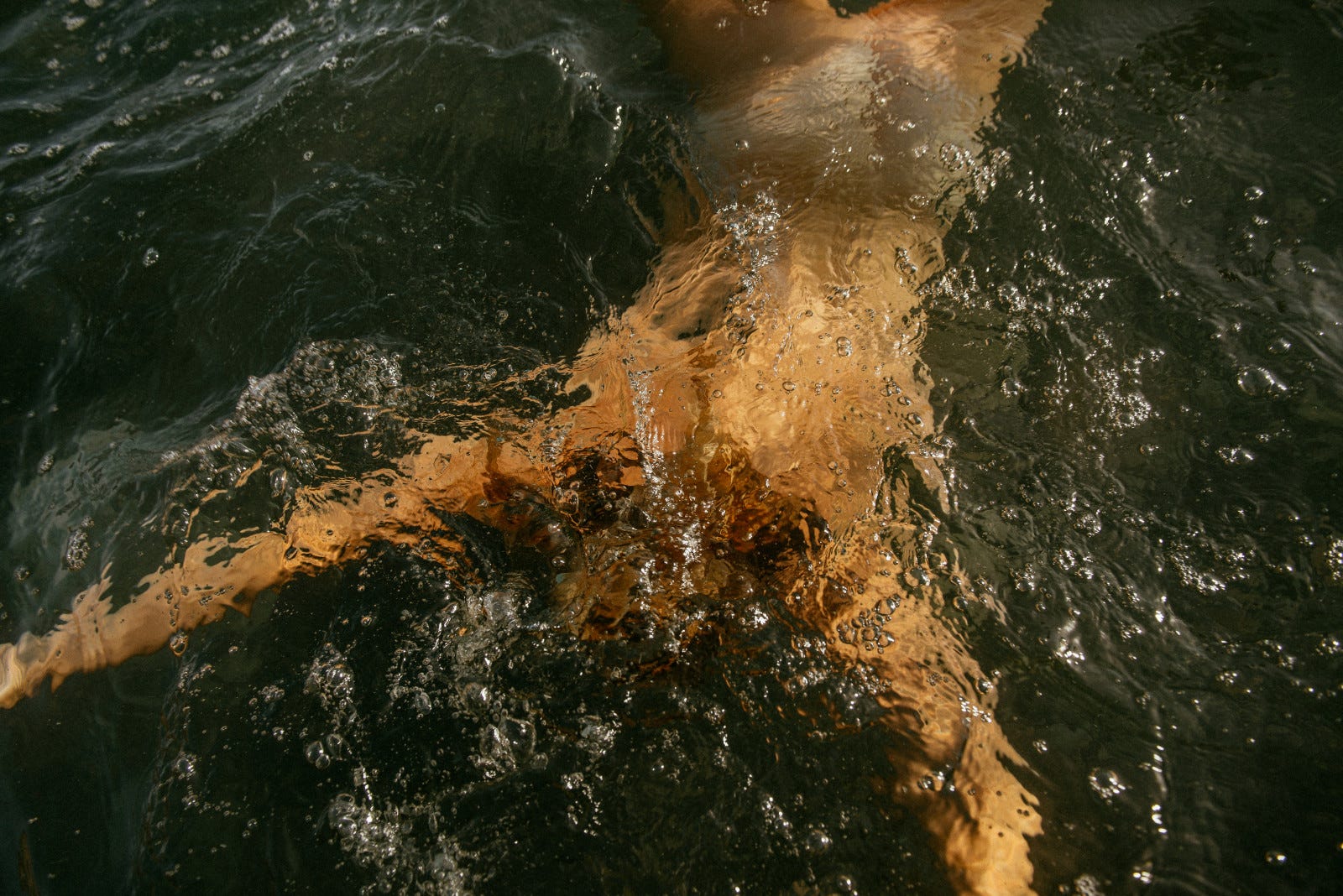
A hermit crab is born soft. It carries no shell of its own; its abdomen stays tender its whole life, which is why it borrows the empty shells of snails and wears them like a house it did not build. But a borrowed house does not grow, and the crab does. So every so often it must do the one thing its whole anatomy is arranged to avoid: it must climb all the way out of its shell — fully soft, fully exposed, every defence abandoned at once — and cross the open ground to a larger one, with nothing protecting it in between. There is no version of getting bigger that does not pass through that moment of total vulnerability. The shell cannot be enlarged. It can only be left.
And here is the part that undoes me a little. On some shores, when a single large shell washes up, the crabs do not fight over it. They line up. They arrange themselves by size, smallest to largest, in a queue beside the new shell, and wait. When the biggest crab moves in, the next one takes the shell it left, and the next takes that one, all the way down the line — each crab exposed for only as long as it takes the crab ahead to move. Biologists call it a vacancy chain. What it is, is a way of being soft in company. Of timing your exposure to someone else’s, so that no one has to be undefended alone.
That is what opening a practice up has felt like.
For the past while I have been building something called Companions — a reading of all fifty-two weeks of Make Space, where each week is paired with a feeling that may arise in it, and a natural body that keeps that feeling company. Week one and the held breath of not good enough, with a seedling reaching upward in the dark before there is any proof it is growing. A week of overwhelm, with the spring flood — not the river’s failure but a snowpack larger than the banks were built for. A week of anger, with the storm, which moves energy from where it has gathered to where it is needed and then is done. The feelings are named, deliberately, in pencil and not in ink — offered as a guess held loosely, not a fixed set to be identified and filed.
To publish that is to climb out of the shell. Because naming the feeling that might come up in someone’s week — out loud, in advance, in writing — is a claim about the most private thing there is, made by someone who cannot possibly know whether they are right. What if the feeling I named for your week is not the feeling you find there? What if I have told you to expect grief and you arrive at relief, and now my naming is in your way?
I carried that worry for a long time. And then I found the thing that loosened it, which is also the thing I most want to hand to you before you begin.
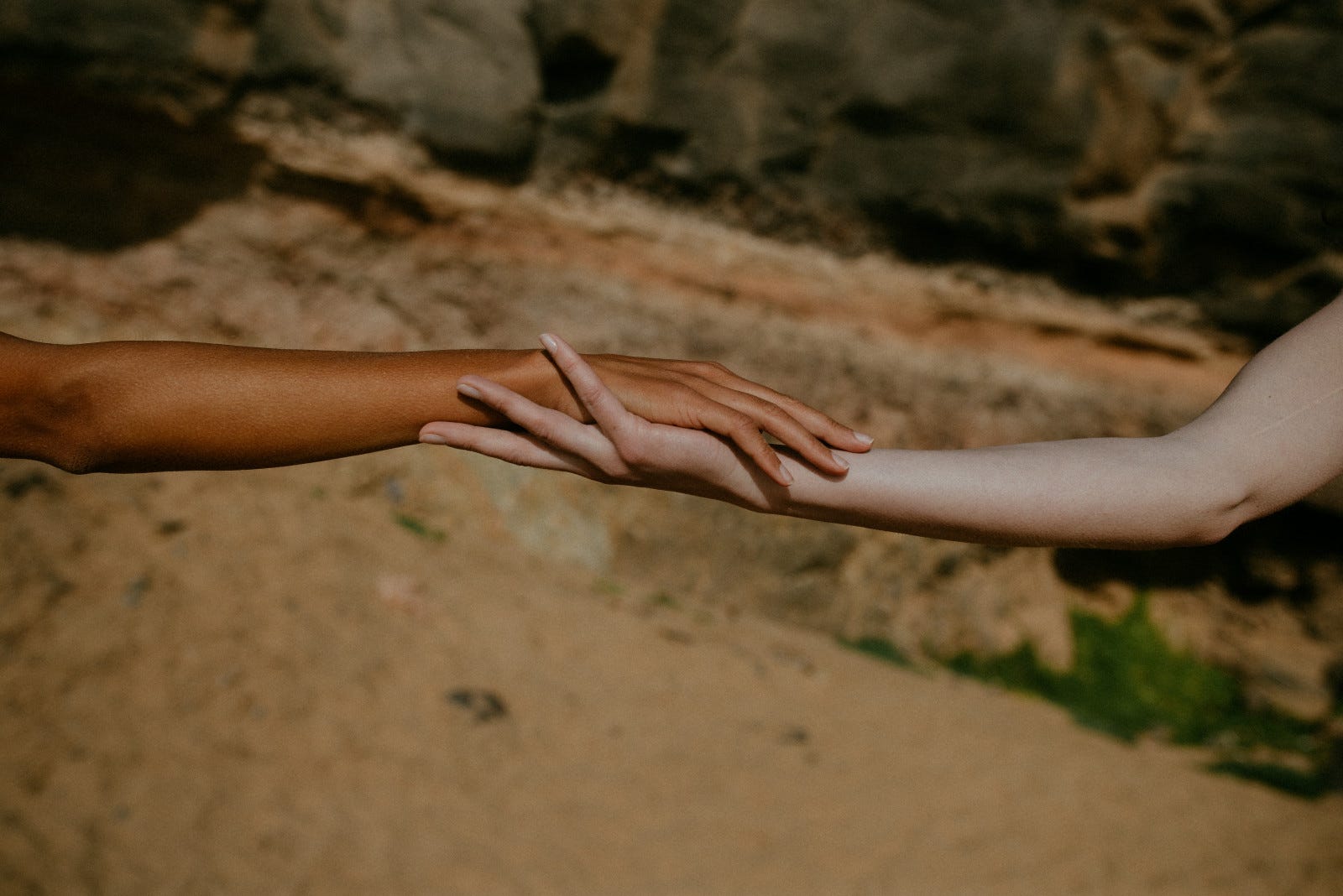
The neuroscientist Lisa Feldman Barrett spent two decades looking for the fingerprints of emotion — the idea, old and intuitive, that somewhere in the body there is a fixed signature of fear, of sadness, of anger, the same in everyone, waiting to be discovered and correctly named. She did not find them. What the evidence kept showing instead is that emotions are not triggered in us like alarms going off; they are constructed — built in the moment by a brain making meaning out of raw bodily sensation, using the concepts and language and past experience it has to hand. Her 2017 theory of constructed emotion puts it plainly: an emotion is not a thing you have and then recognise. It is a thing your brain makes, each time, out of what you bring to the moment. The same unease becomes dread in one context and anticipation in another, not because you have misread your body, but because there was never a single correct reading waiting underneath.
Sit with what that does to the fear of naming a feeling wrong.
If emotions were fixed inner facts, then naming the feeling for your week would be like guessing a number — I would be right or wrong, and mostly wrong, and the naming would be an imposition. But if emotions are constructed — if your brain builds the feeling, in the moment, partly out of the concepts available to it — then a name offered in pencil is not a guess at a hidden truth. It is a concept made available. It is one more ingredient your brain can reach for, or decline, as it constructs whatever it is actually going to construct this week. I am not telling you what you will feel. I am widening the shelf you build from. Researchers applying Barrett’s work to therapeutic practice describe exactly this: that feelings are co-constructed in language and relationship rather than discovered as universal internal states — and that the work of naming, done well, is a way of building experience together, not diagnosing it.
So the companions are not a key to your inner life. They are a vocabulary, held loosely, and a body to hold it with.
This is the part I will not dress up: I do not know how this goes. I cannot tell you that pairing your week with a hermit crab or a spring flood will make the feeling easier, or clearer, or even findable. Some weeks the named feeling will be exactly the one waiting for you, and there will be a small relief in being met. Other weeks you will sit with the companion and feel nothing it predicted, and the honest thing to do then is to let the pencil be wrong and stay with what is actually there. Attunement is not matching your experience to the label. It is staying in the week long enough to feel what is genuinely present — and the companion is there for that staying, not to end it. I am running this experiment in real time, on myself, alongside you. We are, both of us, expanding the range of what we can feel and name and stay with. I cannot promise where that ends, because expanding the felt range is not a destination. It is a capacity, and capacities are built by use.
So here is the invitation, peer to peer, both of us soft for the moment.
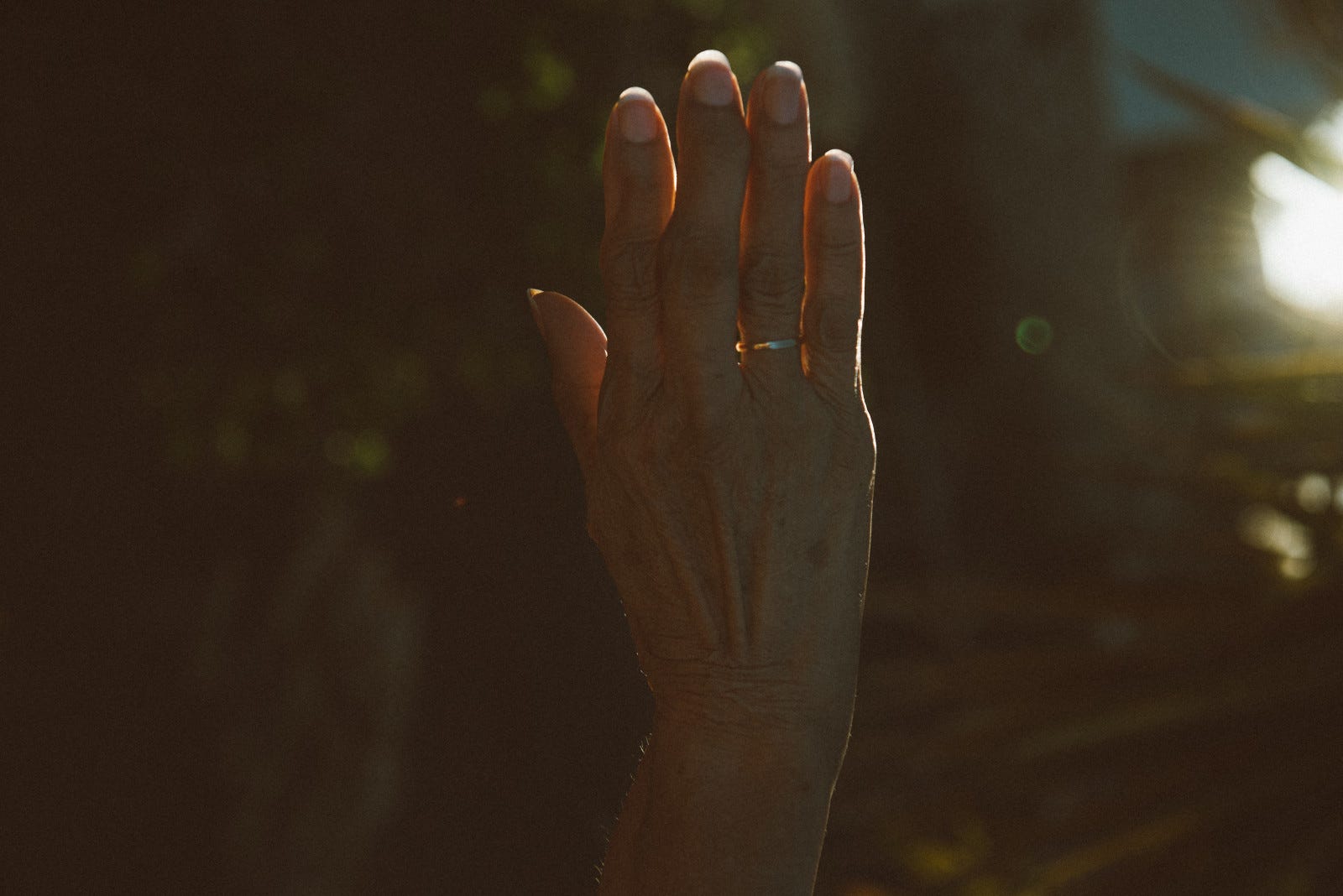
Each week, as we come to it, will arrive with a companion — a feeling named in pencil, and a natural body to keep it company. I am not going to lay the whole year out in front of you at once; a feeling you have not reached yet is not yours to hold, and a list of all of them read in an afternoon would only become information. They will come one at a time, in their own week, the way the weeks come. When one arrives, do not try to confirm the feeling. Sit with the natural body first. Let the seedling, or the flood, or the wolf’s howl that locates the pack be itself for a minute before you ask what it has to do with you. The feeling, if it is there, will come up to meet the body on its own.
And on the weeks when the feeling is hard to enter at all — when you can tell something is present but cannot get down into it — you do not have to force it with your mind. The body has its own doors. A few slow minutes of attention to the breath, a body scan that moves through you without fixing anything, a simple practice of noticing sensation before naming it: these are the oldest ways into a feeling, and many of them are freely available to practise along with, including upcoming guided versions on YouTube you can keep on while you work. Use them as you need them and leave them when you don’t. (If it would help, I am glad to gather a small set of the ones I actually return to, so the companion and the practice can sit side by side.) None of it is required. It is scaffolding for the weeks the climb is steep.
That is the whole of the offering. Not a map of what you will feel. A vocabulary in pencil, a wild body for company, a few doors into the harder weeks — and the plain fact that I am out of my shell too, in the open with you, timing my exposure to yours so that neither of us has to be soft alone.
The hermit crabs line up on the shore and wait for the shell to come. None of them knows, in the waiting, whether the fit will be right. They climb out anyway, because that is the only way the body that is still growing ever gets to keep growing.
Here is the question I am leaving open, because I have not answered it and may not for a long time: when a feeling is built rather than found — when there was never one true name waiting underneath — what changes about how gently we might hold the ones we have been carrying as facts?
I don’t know yet. Let’s find out in the weeks ahead.
Make Space is a 52-week year of creative health in four movements — Foundations, Literature, Investigation, Synthesis — published by Therapeutic Studio. Each week arrives with a companion: a feeling named in pencil and a natural body to keep it company, offered one week at a time rather than all at once. The whole arc, week by week, is laid out in the series map. The account of constructed emotion comes from Lisa Feldman Barrett, "The theory of constructed emotion: an active inference account of interoception and categorization" (Social Cognitive and Affective Neuroscience, 2017) and her book How Emotions Are Made: The Secret Life of the Brain (2017); the application to co-constructing feeling in therapeutic practice draws on Givens et al., "More than a feeling: Constructing emotion in theory and practice" (Journal of Counseling & Development, 2022). Hermit-crab vacancy chains were described by Ivan Chase and colleagues. The feelings here are named in pencil; the year may revise them.